Summary
Dating App Use and Wellbeing Among Queer Adults in Canada: A Mixed-Methods Study
This research analysed the results from an online survey and individual interviews conducted with a selection of the initial survey respondents. The online survey was constructed to provide insight on if the intensity of dating app use was associated with mental health outcomes. We also wanted to know if the reason(s) for using dating apps (as in the motivation for use, such as to find sex) was associated with mental health outcomes. Finally, we wanted to know if feeling connected to the queer community and experiences of discrimination on dating apps acted as a pathway between the intensity of dating app use and mental health. We explored 4 mental health outcomes using this model:
- Satisfaction with life;
- Self-esteem;
- Symptoms of depression; and
- Symptoms of anxiety.
Follow up interviews were conducted with a selection of survey participants. There were 9 main topics of conversation:
- Typical dating app use;
- Reasons and motivations for dating app use;
- Dating app profiles;
- Dating app cultures;
- Feelings about dating app use;
- Perceived impact of dating app use on wellbeing;
- Perceived impact of dating app use on queerness and perception of self;
- Perceived impact of dating app use on queer community; and
- Comparing dating app features and interfaces.
The queer adults in this study discussed the innovative, important, and effective strategies that they used to prevent the harms associated with dating app use. Some of the data from this research suggests that interventions may not be necessary in many cases. Queer peoples are strong and resourceful, continually working to fulfill their needs.
Key Findings
Survey Findings
Our analyses of the online survey revealed the following key findings:
- The intensity of dating app use was not related to symptoms of depression or anxiety. However, a higher intensity of dating app use was related to higher satisfaction with life and higher self-esteem.
- Using dating apps for sex was not related to any of the 4 mental health outcomes.
- Using dating apps for social approval (as in external validation from other users) was related to higher symptoms of depression and higher anxiety as well as lower satisfaction with life and lower self-esteem.
- Using dating apps for romance was related to lower satisfaction with life but was not related to the remaining mental health outcomes.
- Using dating apps for friendship was associated with higher feelings of connection to the queer community. Higher connectedness to the queer community was in turn related to higher satisfaction with life and higher self-esteem.
- The intensity of dating app use was not related to experiencing discrimination online. However, experiencing discrimination on dating apps was associated with higher symptoms of depression and anxiety as well as lower satisfaction with life and self-esteem.
Interview Findings
Although the analysis is still ongoing, initial interpretations and findings are provided below. For the sake of brevity, some themes are excluded from this report.
Theme 1: Dating App Cultures and Cultural Norms
Participants largely described that different dating apps have their own unique cultures. This is often because apps serve different purposes for users.
Theme 2: Presentations of Self and the Impact on Queerness
When asked directly if using dating apps has influenced participants’ sense of self and/or their queer identities, responses were mixed. Some felt that using dating apps was an important part of their socio-sexual development and identities. For other participants, dating apps simply offered a space to express, practice, and affirm their queerness, rather than develop their identities. They noted other experiences, including using Tumblr or connecting to queer social circles in-person, as being more important for their queer development.
Theme 3: Discrimination and Fetishization
Most of the participants explained that discrimination and fetishization are an ongoing issue on dating apps that are continually evolving and presenting in new ways. A few participants noted that they had not experienced discrimination themselves but were aware that other marginalized users likely did.
Theme 4: Impact on Wellbeing and Coping Mechanisms
Throughout their interviews, participants described their experience on dating apps in many ways, including positive (affirming, improving quality of life, making new connections) as well as negative (isolating, distressing, frustrating, addictive). Often, participants described their experiences with dating apps as both positive and negative in what may seem contradictory, but rather demonstrate the complexity of social connection online.
Overall Takeaways
- The relationship between dating apps and mental health outcomes is not straight forward. Dating app use is not necessarily related to poorer mental health, which has been the findings of previous studies. This study has uncovered the specific conditions where using dating apps can lead to better mental health, including through increased community connectedness.
- Dating app users are continually aware of how their dating app use is affecting their health. Users have developed various strategies to mitigate harms, including stepping away from the app, sharing distressing experiences with friends, and adjusting their expectations on the app.
- Discrimination and fetishization are still persistent issues on dating apps – this was acknowledged by nearly all participants, including those who did not report experiencing discrimination themselves. Experiencing discrimination is associated with poorer health outcomes. However, marginalized queer people on dating apps have developed specific coping mechanisms to navigate experiencing discrimination online.
- Queer people use dating apps in various ways and for different reasons, often simultaneously. While looking for sex is commonly reported as the primary use for dating apps, users are often open to new and unexpected connections.
- Different dating apps have different cultures, and this shapes how people interact with each other on different platforms. Often this can mean that to be successful on different dating apps (e.g., Tinder vs Grindr) you must appeal to different aesthetics.
- Dating apps are just another tool for social connection. They can help foster meaningful experiences and new relationships, as well as enrich the lives of users. They can also be an isolating and distressing space. Dating app users view dating apps as a convenient and accessible platform to connect with other queer people.
Methods
Online Survey & Structural Equation Modelling
The online survey included roughly 200 questions about personal information, dating app use, experiences of discrimination, connection to queer communities, and self-reported mental health. Most of the questions were asked as multiple choice or rating on scales (for example, rate your agreement with this statement from strongly disagree to strongly agree). Most of the survey respondents identified as cis men, gay, and single. The average age of the participants was 36.18 years. The youngest participant was 18 and the oldest was 71 years old. The apps used by most participants were Grindr, Tinder, and Scruff.
We conducted statistical analyses to explore how using dating apps might relate to mental health in this sample. For this, we used a technique called Structural Equation Modelling (SEM). You can think of SEM as a tool that helps us understand the connections between different things. In our case, these ‘things’ are the use of dating apps and various aspects of mental health. SEM can help us draw a map of the relationship between these concepts to see how they are connected.
Individual Interviews & Thematic Analysis
A total of 27 participants who completed the online survey were also invited to attend individual interviews. Participants were selected to represent a diversity of identities, including gender, sexual orientation, age, ethno-racial identity, and location in Canada. Four individuals declined to be interviewed and 3 did not attend their scheduled session. Of the 22 people who did complete an interview, 12 participants completed the survey before the interview and 10 participants completed the survey after the interview. The interviews lasted between 38min and 1h24min. The interview guide was shared with all participants before their scheduled interview to allow them to become familiar with the topics to be discussed.
The interviews were audio recorded and transcribed verbatim (word for word). The transcripts were analyzed using an approach called Thematic Analysis. This is a flexible approach that searches transcripts for common topics, ideas, and thoughts, which are known as themes. Thematic analysis is an iterative process, meaning that the researcher returns to the dataset continually to refine and improve their interpretation of the results.
Applications
Below are recommendations for providing resources and supports, as well as enacting policy changes that can support queer peoples. The recommendations are organized by the level of the user, dating app company, and government.
Users
At the individual/personal level, it is important to make health and educational resources available to queer peoples to use them if needed. While many adults in this research employed successful coping mechanisms, they collectively described feelings of loneliness and isolation, as well as the need to feel affirmed and validated by others regarding their dating app experiences. One such strategy would be to make available public health/community-led educational interventions regarding dating app experiences and strategies to navigate the online space (including safety strategies, setting realistic expectations, and health promotion strategies). The information regarding these resources could be disseminated through advertisements on dating apps (e.g., Grindr Ads), social media accounts of dating apps (e.g., Grindr’s Instagram page), queer community forums (e.g., queer social media pages), and community organizations and queer health clinics. Previous research has described the effectiveness of sexual health promotion and educational strategies on dating apps. These strategies can be expanded to include mental health, self-efficacy, and behavioural interventions.
Dating App Companies, Technologies, and Features
At the level of the dating app company, several strategies can be implemented to promote the health and wellbeing of queer adults.
- Safety features: Safety strategies and features, including blocking, should not be limited behind a paywall, so their use is not limited. Participants in this study noted how blocking was an important safety strategy and coping mechanism.
- Content moderation: Increased content moderation can be implemented to limit discriminatory, hateful, and unwanted content. This does not necessarily need to prevent sending messages but rather blurring or notifying potential recipients of lewd or harmful content. Content moderation can be offered as a safety feature that users can choose to employ. For example, dating apps typically only allow participants to make a note on their profiles that NSFW photos are desired or not (usually for queer apps, as apps like Tinder do not allow photo sharing), which is often overlooked by other users as was indicated by participants in this study who noted that other users largely do not read their profiles. Instead, a safety feature could be provided, such that lewd photos are automatically blurred for participants who turn on that feature and/or require approval for the recipient to be received. Determining what information or messaging is hateful/unwanted can be difficult and vary between users, therefore, providing users the ability to tailor content moderation to their individual needs may evade issues arising from blanket content moderation.
- Photo verification: Some dating app companies have implemented photo verification software (e.g., Tinder) and other apps can adopt this to increase users’ sense of accountability and the perception of authenticity. Privacy and anonymity are important to various members of queer communities, and therefore, this type of initiative should be an optional feature of dating apps. Photo verification can be made available to users who seek to present more “authentically” online, without unfairly targeting or outing users who require/value additional privacy. Personal user data protection and security must be at the forefront of changes implemented.
- Limiting usage: Dating apps can incorporate features to allow users to limit the dates/times they can be on their apps. They can also incorporate features that notify users if they are ‘endlessly scrolling.’ Several companies, including TikTok, Instagram, and YouTube, have instituted features that allow users to set a time limit on their platforms.
- Promoting inclusive values: Several participants explained that dating apps can play a role successfully promoting anti-oppression on their apps. Although some of these strategies are performative and not necessarily successful, participants in this study spoke positively about initiatives such as Kindr (by Grindr) and body-inclusivity (by Growler). Similar initiatives can be expanded and promoted by dating apps to assert their commitment to promoting safer and more inclusive spaces. It is also mandatory for dating app platforms to uphold their policies rather than passing the burden on queer peoples who do the work of reporting, blocking, and confronting discriminatory users online.
Government
At the government level, policies can be implemented to hold dating apps accountable. This can include policies requiring dating apps to disclose strategies used to exploit users’ attention to maximize profit, allowing users to be better informed about their dating app use. Currently, there are no specific federal government policies or regulations in so-called Canada that directly target dating apps. However, general laws and guidelines do apply:
- Canada's Personal Information Protection and Electronic Documents Act (2019) sets rules around how private companies must handle personal information, including for online services like dating apps.
- Section 230 of the Communications Decency Act in the United States, which precludes software providers from being held liable for information placed on their sites by users, also prevents dating app companies from facing legal repercussions for offenses perpetrated on their platforms. Although Canada has not implemented similar legislation, the United States-Mexico-Canada agreement requires broad protections against liability for platforms hosting third-party content.
Various public institutions in Canada have attempted to hold social media companies accountable for harms associated with their platforms.
- The Canadian Federal Governments’ Online Harms Act requires platforms (e.g., YouTube
- YouTube and Facebook) to actively regulate and remove harmful content, including material that bullies or sexually victimizes children, or incites extremism, violence, or hatred.
- The British Columbia Government introduced the Public Health Accountability and Cost Recovery Act, allowing the province to sue social media companies for public harms caused by their platforms (a response to promotion of vaping and energy drink consumption by said platforms).
- Lastly, four major Ontario school boards have filed lawsuits against social media giants (Facebook/Instagram, SnapChat, and TikTok) alleging that the design of their platforms has negatively impacted children’s mental health, behaviour, and learning as well as incites cyberbullying, harassment, hate speech, and misinformation.
It continues to be unclear how liable dating app companies should be for offenses committed on their platform. Nevertheless, government guidelines and/or policies may prove to be a useful avenue to promote more inclusive dating app practices. Governments may also mandate that dating app companies link to support services and community resources that are queer-specific and available to users should they require additional supports. The development of these types of guidelines and mandates will require further consultation and input from queer users.
Connections
Outcomes from Research
- The research findings were presented at the Canadian Sex Research Forum in Halifax, Nova Scotia in November 2024.
- A doctoral dissertation/thesis has been completed and successfully defended. It has been published in ProQuest and will be released to the general public in November 2025. The dissertation can be found here: https://www.proquest.com/pqdtglobal/docview/3133027609/1FDBAA359CA446BEPQ/1?sourcetype=Dissertations%20&%20Theses.
Next Steps
The research data collected for this study will continue to be published, with further analyses underway. The findings will also inform future research projects to improve our understanding of queer health as it relates to dating app use.
Publications based on this study include:
- Depathologizing Queer Adults’ Dating App Use: A Convergent Mixed Methods Study
This paper examines the association between dating apps and mental health, highlighting the coping mechanisms employed by queer adults to promote their wellbeing.
Upcoming research papers are under review by academic journals and are anticipated to be published in the next year. The titles of these papers are tentatively:
- Using Reparative Queer Theories for Transformative Mixed Methods Research
This paper contributes to the debate among queer scholars about synergies/tensions between quantitative and qualitative methodologies, arguing for a reparative and transformative mixed methods approach that incorporates messiness through the research process.
- Reparative Hyperrealities: A Mixed Methods Exploration of Queer Identities and Dating App Cultures
This paper engages with Baudrillard’s (a sociologist and media scholar) concepts of simulacra and simulation (a theory about how media shapes the world through representations of reality that are increasingly removed from reality or misrepresenting reality) to examine the production of signs and symbols on dating apps, uncovering implications for queer identities and individualities.
Author
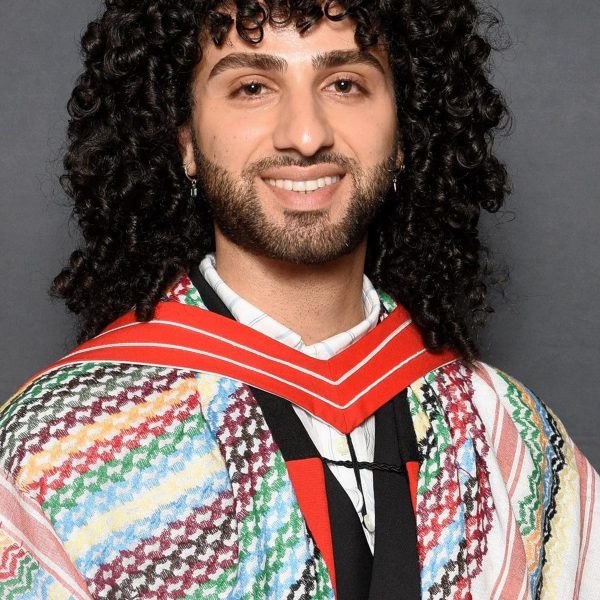
The study was led by Dr. Jad Sinno as part of their doctoral dissertation (A Reparative Analysis of Dating App Use and Wellbeing Among Queer Adults in Canada: A Mixed Methods Study) at the Dalla Lana School of Public Health, University of Toronto.